
Stuck Season
What I did when the Percocet wore off

Hello, everyone. Thanks for your response to last week’s essay about my aversion to best-of lists and my love of writing.
Some personal news. A couple weeks ago, I ruptured my quadriceps tendon in a random accident. Even after emergency surgery and an ortho surgeon’s come-to-Jesus announcement of a year-long recovery, my inner farmgirl was in denial.
It’s how I was raised. Once, a bull charged my dad on our Kansas farm. We never learned the precise damage to my dad’s bruised, swollen arm, because he didn’t stop working long enough for a doctor or even a veterinarian to examine the injury. The dairy cows and harvest waited for no one.
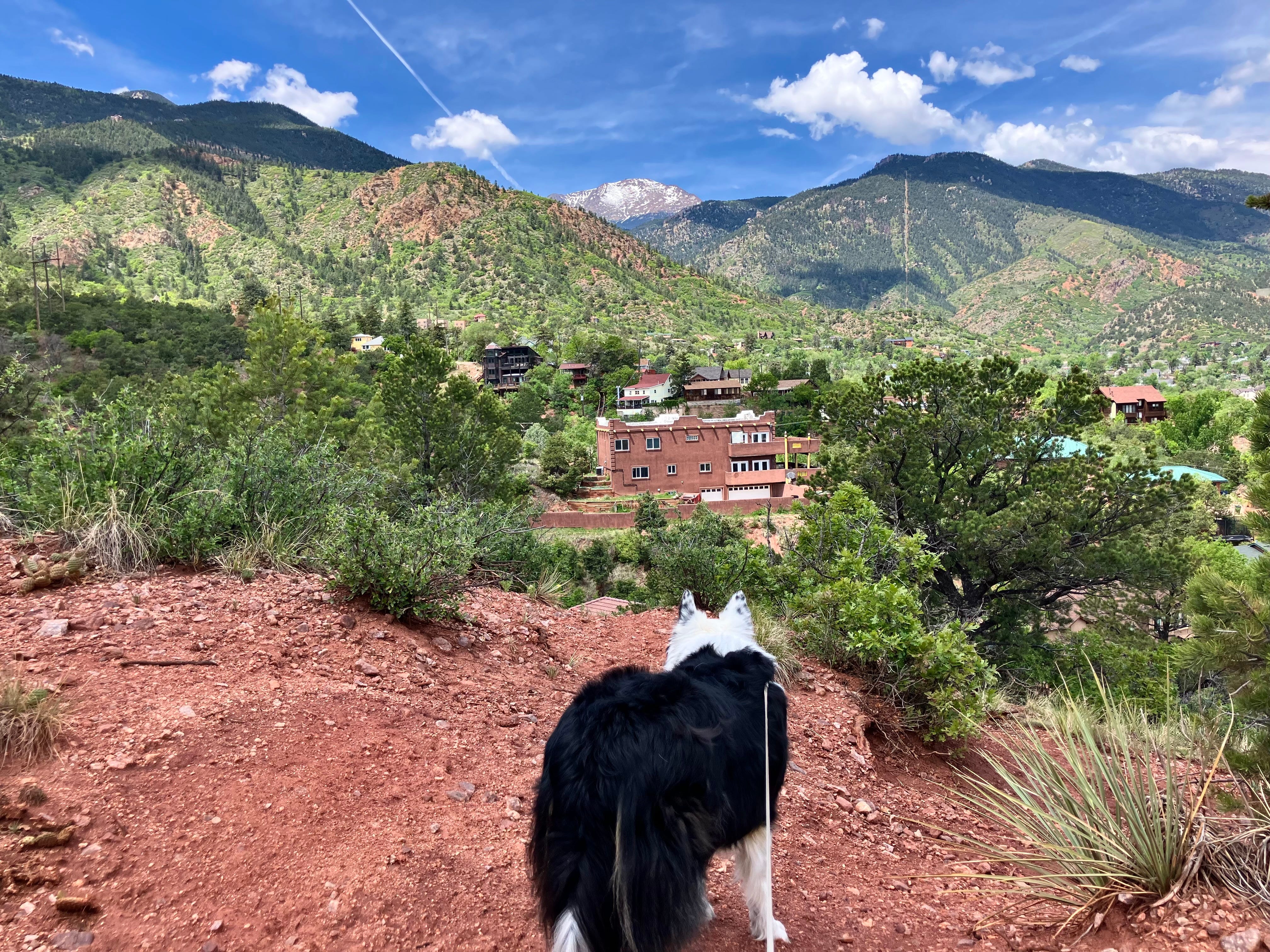
My foundational psychology holds that a steely will and daily imperatives can and should return us to normal life ASAP. I figured I’d soon be back to my routines: chauffeuring the teen, hearing live music, weeding the garden, traveling to report and write, and walking my dog Dexter in the mountains around our home.
Here, though, the connection between the front of my thigh and knee was fully severed. Post-op treatment involves wearing a locked brace for at least two months, with no driving allowed. Six months of in-office physical therapy will retrain the leg to do its thing.
When I asked my ortho surgeon if I could still make it to a June-July writing and swimming retreat in Maine, his sarcasm did Gen X proud.
“What do you think?” he asked. “Peg-legging around in a brace on slippery rocks and unfamiliar surfaces? Does this sound like a good idea?”
I canceled plans and shifted to another core mythology: valiant self-improvement. Spasms of it. Thoreau and Emerson’s self-reliance love-child was born in my heart.
Homebound and hobbled, I’d finally realize my authentic overachieving self. I’d become fluent enough in Spanish to translate poetry before I was out of the brace. I’d write three books in as many months. I’d apply my meditation practice to all aspects of life, becoming a model of serene self-possession in every waking moment. I’d emerge from this challenge fully actualized and optimized. Look out, Proust and Pema Chodron!
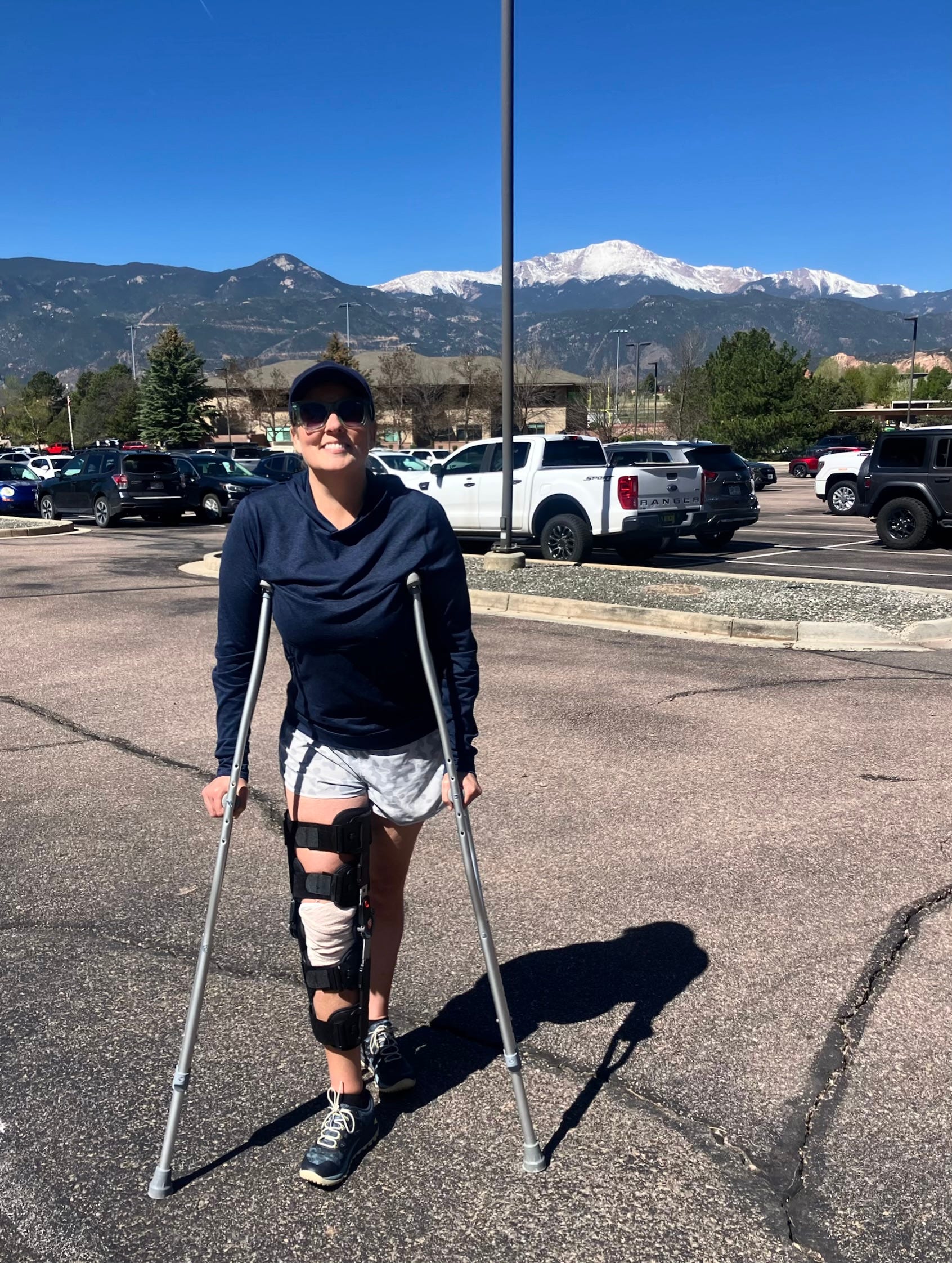
The grandiosity wore off when the Percocet did. Neither heroics of will nor hysterics of self-improvement are of much use in my present situation. A sturdy character, steady work, and sense of humor will get me through the small, unspectacular gains of a long recovery. Some nicknames I’ve earned so far: Rear Window and Stick Season.
Inflated notions of self-actualization aside, recovery allows plenty of time for reading and writing. Below are some books I’ve enjoyed.
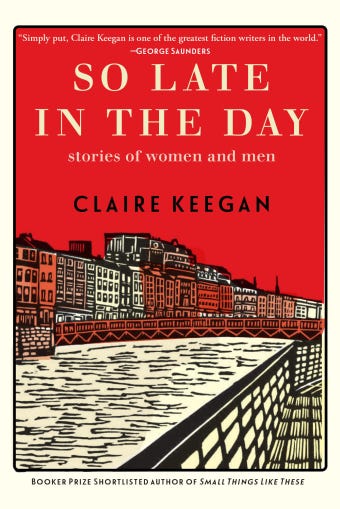
With my attention span frayed by contemporary life (you all know), I eased in with Claire Keegan’s short stories. Keegan is rightly praised for her compression, Chekhovian restraint, and precision. I return to Keegan’s books for the emotional weight she finds in the mundane realities of rural Irish life. If you’ve not read her before, start with Small Things Like These, which was shortlisted for the Booker Prize.
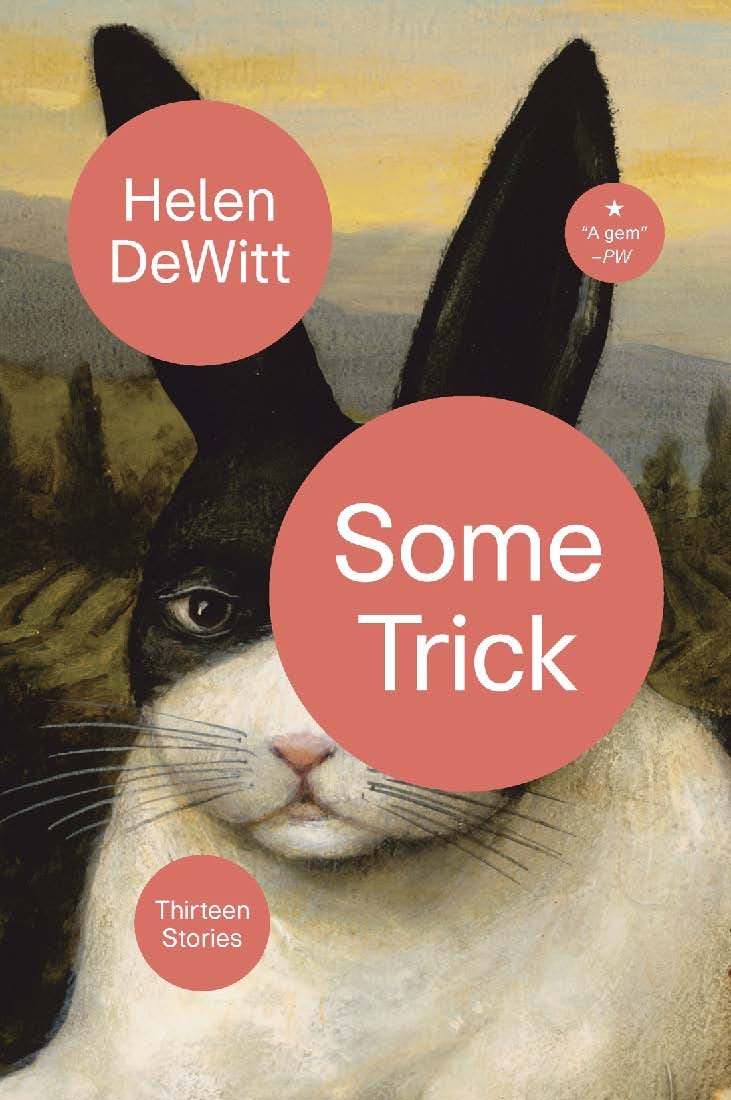
The Helen DeWitt awards drama led me back to the comforting brilliance of her fiction. This spring, DeWitt won the $175,000 Windham-Campbell Prize but said she couldn’t manage the publicity duties associated with it, so she returned the award. Tyler Cowen’s Emergent Ventures then swept in and awarded DeWitt the same amount, with no strings attached. The literary world was divided: Was she a spoiled artiste who needed to suck it up, Buttercup, or was she somehow genuinely undone by the first award’s publicity expectations?
DeWitt has my full sympathy, but I’ve long been a fan. I’ve read DeWitt’s cult classic The Last Samurai five times since a boyfriend gave it to me for Christmas in the year 2000. This time, I returned to her 2013 short story collection, Some Trick. In these stories, DeWitt’s mildly experimental prose nudges a reader into the distinct reality of its rhythm and perspective. The collection specializes in ruminative characters whose artistic integrity is often undervalued. In other words, DeWitt’s short stories would be a perfect fit for many readers of this newsletter.
Soon, I had reading momentum. Infirmity has given me occasion to slip into books as my childhood self once did—instinctively, like sliding into cool water on a hot day. The discipline of choosing to read rather than scroll gave way to the pleasure of reading for escape.
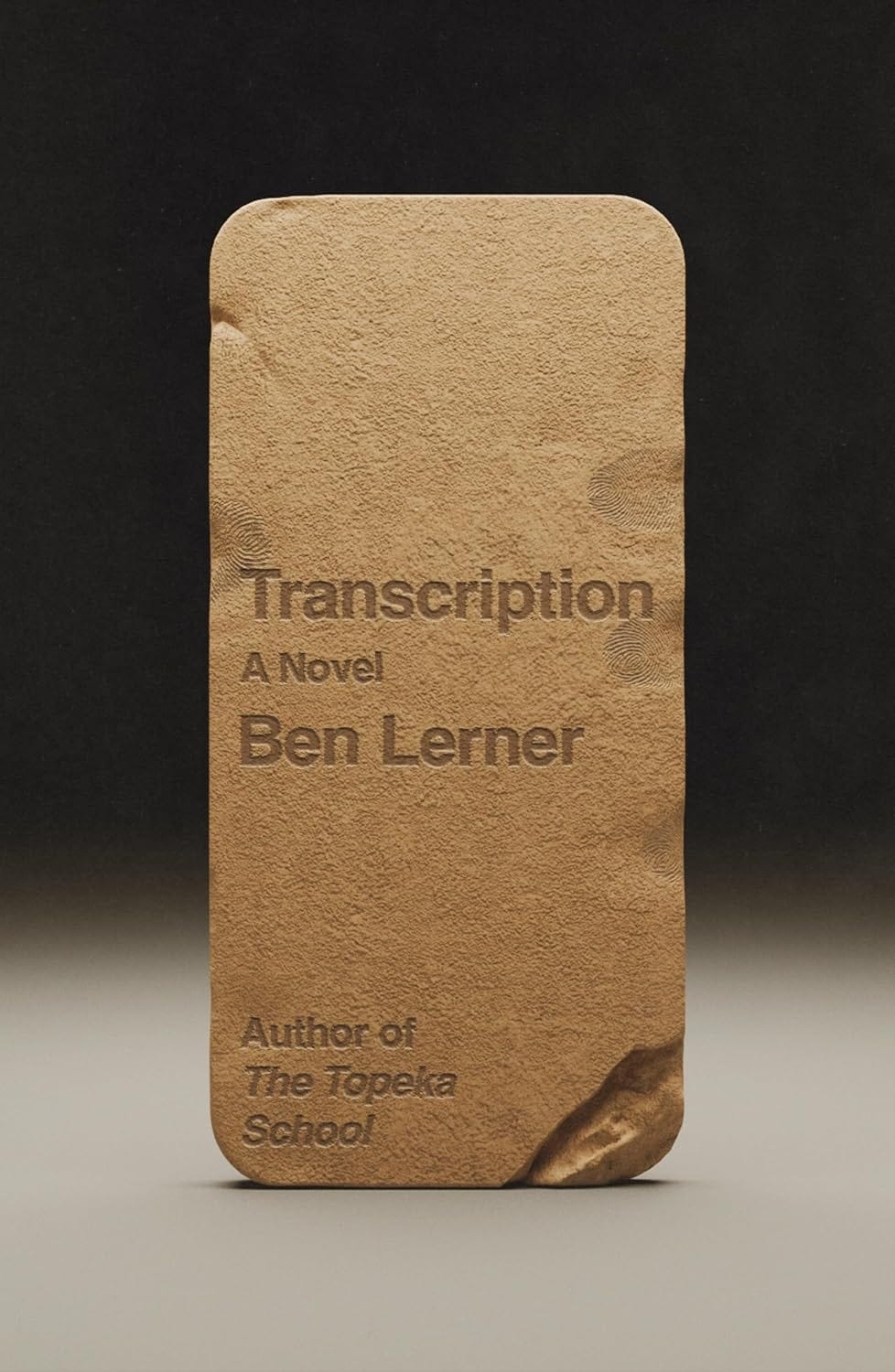
That said, I didn’t love Ben Lerner’s Transcription as much as I expected to. Cerebral fiction like Lerner’s is usually my thing, even when a story’s human drama doesn’t quite sustain a novelist’s ideas. I’ve long defended Richard Powers’ fiction against critics who find it too ambitious, his characters mere vessels for big thoughts. So what? I’d say. It’s interesting.
Transcription’s plot is highly relatable to me. In the novella, a writer travels to Providence to interview his older mentor, drops his phone in a sink, and can’t bring himself to confess that he has no recording device. I’ve often been the younger writer interviewing a great artist at home—though some tragic losses as an NPR contributor trained me to carry at least two recorders (in Bahia, I once lost a 30-minute recording of Carlinhos Brown pretending to be a DJ, introducing various Brazilian music to his imaginary U.S. listeners). Transcription also considers themes I happen to care about, such as the act of writing and the nature of truth.
The book struck me as narrow and precious, leaving me wanting more. Still, Transcription is worth reading for its ideas alone.
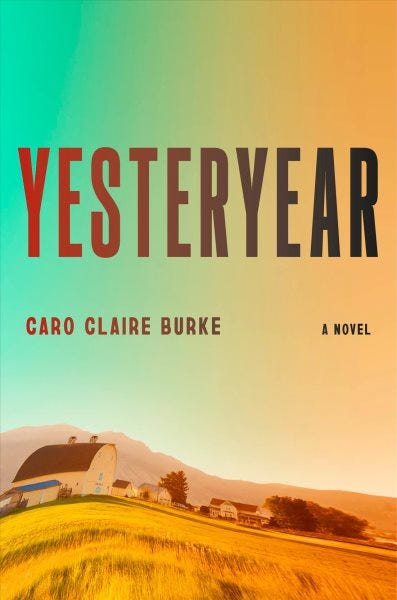
I got my MFA in Writing and Literature from the Bennington Writing Seminars. This education made me curious about the backlash to fellow alumna Caro Claire Burke’s popular debut novel, Yesteryear. It’s the book of the moment: a #1 New York Times bestseller and a Good Morning America Book Club pick.
If Substack takedowns of the book’s thin characterization and generic religious treatment were to be believed, I didn’t see how Burke could have gotten into the Bennington Writing Seminars, let alone graduated. Those sorts of critiques were definitely raised in our rigorous workshops. Could the backlash to Yesteryear be fueled by the enduring notion that a runaway bestseller can’t truly be any good?
Burke’s dark satire features Natalie, a 32-year-old tradwife influencer whose rustic Idaho ranch life is highly produced for the screen. Natalie suddenly wakes up in 1855, forced to actually live the life she’s been performing, but without nannies, producers, or modern appliances. Along the way, Burke skewers MAGA culture, online performance, and unrealistic expectations for women.
Perhaps a story of domestic entrapment has particular appeal in my current housebound situation. But I agree with the wide praise for Yesteryear. I empathized with the protagonist Natalie enough to be lured into her mentally ill perspective a couple of times. For me, it works as both satire and story.
We’ve transformed the master bedroom into a rehabilitation haven, complete with a TV—the first one I’ve allowed there since I was on pregnancy bedrest 15 years ago. So how could I not kick back and watch Dutton Ranch, a Yellowstone spin-off series starring Annette Bening as a ruthless Texas rancher named Beulah Jackson? The first two episodes delivered. I’m eagerly awaiting Friday’s release of the next one. Bring on the grizzlies in Gucci.
What are you reading and watching?
If you’d rather not subscribe, you can support my writing with a one-time contribution via Venmo: @michellemercerwriter Email: michellemercer@mac.com Thanks!
Take care of yourself. I find sometimes that injury or illness can actually lead to new insights or growth. Best wishes.
Wishing you a speedy recovery. I know how hard it must be for you to stay still!